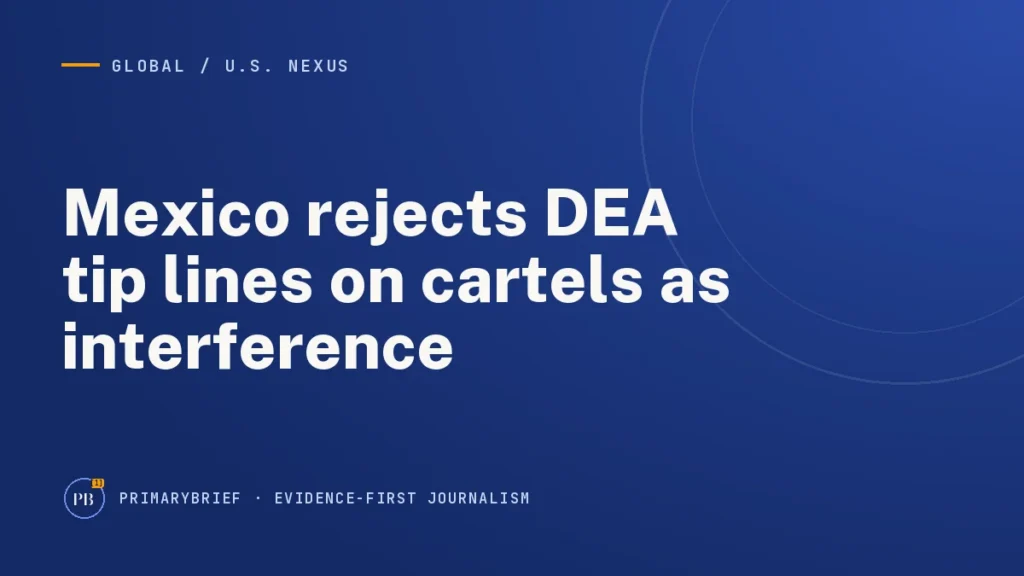
Mexican President Claudia Sheinbaum called the U.S. Drug Enforcement Administration’s new anonymous tip lines targeting cartel networks in Sinaloa an act of interference, and her Security Cabinet backed her up with a formal rejection on Nov. 26, 2026. [2][4]
DEA Administrator Terry Cole had announced the tip lines on his X account less than 24 hours earlier, asking Mexicans to report members of criminal networks, corrupt officials and money launderers in Sinaloa state. [1] Tips submitted via Signal, WhatsApp and email would be handled confidentially, Cole said. [1]
Sheinbaum fired back at her morning press conference, reading excerpts from an Associated Press investigation reporting that the DEA allowed at least 1.4 million counterfeit fentanyl pills to go unseized over eight months while tracking a drug trafficking ring flooding the Southwest with drugs. [1]
‘The first thing it should do is investigate corruption in the United States linked to organized crime, or what they call terrorist groups,’ Sheinbaum said. [1]
She also questioned how Washington would react if Mexico’s Ministry of Security and Citizen Protection opened a WhatsApp line to report corruption inside the United States. [2]
Mexico’s Security Cabinet issued a statement the same day declaring that ‘Mexico does not accept unilateral actions or interference within its territory.’ [4]
The United States has pressed Mexico to fight cartels more aggressively and offered to deploy troops on Mexican soil, something Sheinbaum has ruled out while saying security cooperation with Washington will continue ‘but without subordination.’ [3]
Six days before the tip-line dispute, on Nov. 20, Mexican military forces captured Fausto Isidro Meza Flores, known as ‘El Chapo Isidro,’ a Sinaloa cartel faction ally who was on the FBI’s Ten Most Wanted Fugitives list. [3] Sheinbaum said the decision on whether Meza Flores faces justice in Mexico or the United States must guarantee ‘peace and security in the country.’ [2]